Introduction: Why Jump-Starts Can Be Risky if Done Wrong
Car batteries fail at the most inconvenient times — early in the morning before work, in the middle of a long journey, or late at night when help is scarce. The immediate solution most drivers think of is a jump-start. On the surface, it looks simple: connect some cables, get a boost from another battery, and you’re back on the road.
But here’s the catch: jump-starting a car isn’t as straightforward as many believe. Done incorrectly, it can damage sensitive electronics, blow fuses, fry the alternator, or even cause dangerous sparks and injuries. That’s why Quick Tyre Fix steps in — to provide safe, professional, and reliable jump-start assistance that eliminates the risks.
1: Using the Wrong Cables or Poor-Quality Equipment
The Problem
Not all jump leads are the same. Cheap, thin cables may not carry enough current to start a modern engine. Worse still, poorly insulated cables can overheat, melt, or cause sparks. Some drivers even attempt DIY fixes with random wires, which is highly dangerous.
Why It Matters
Modern vehicles, especially those with start/stop technology, hybrids, or luxury electronics, require a strong and stable current flow. Inadequate cables can cause incomplete starts or damage the donor vehicle’s electrical system.
How Quick Tyre Fix Solves It
Quick Tyre Fix technicians use professional-grade, heavy-duty cables and portable battery boosters designed for all car types, from small hatchbacks to large diesel vans. This ensures a safe, efficient transfer of power without risking the integrity of your car’s electrical systems.
2: Incorrect Connection Order
The Problem
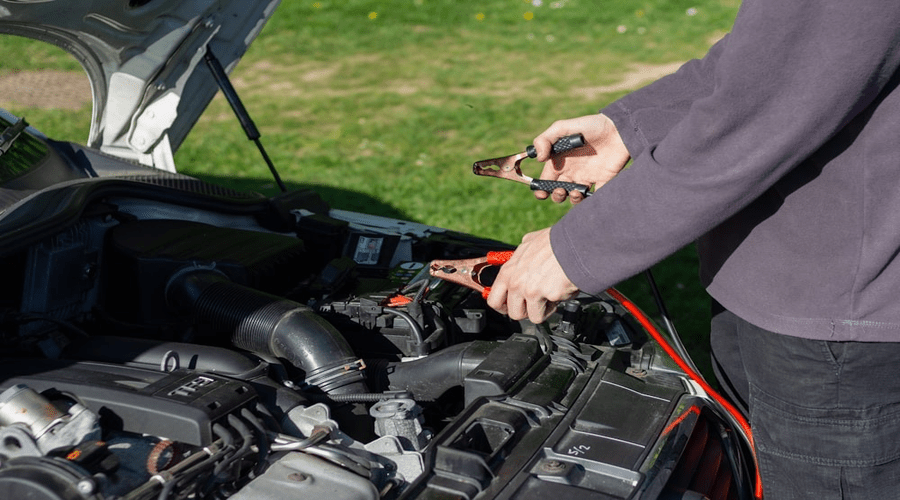
One of the biggest mistakes drivers make is connecting jump leads in the wrong order. For example:
- Attaching the negative cable directly to the dead battery.
- Mixing up positive and negative terminals.
- Allowing clamps to touch metal surfaces and create sparks.
Why It Matters
Reversing polarity or short-circuiting connections can blow the battery, damage the alternator, or fry sensitive onboard computers. In extreme cases, it can even cause the battery to explode.
How Quick Tyre Fix Solves It
Every Quick Tyre Fix jump-start follows a strict step-by-step process:
- Attach the red (positive) clamp to the dead battery’s positive terminal.
- Connect the other red clamp to the donor/booster battery’s positive terminal.
- Attach the black (negative) clamp to the donor/booster negative terminal.
- Finally, ground the last black clamp on an unpainted metal surface away from the dead battery.
This correct order minimizes spark risk, protects electronics, and ensures a safe jump-start every time.
3: Ignoring Safety Precautions
The Problem
Drivers often overlook basic safety steps, such as:
- Failing to turn off both vehicles before connecting.
- Not engaging the handbrake.
- Wearing no eye or hand protection.
- Jump-starting near fuel leaks or flammable areas.
Why It Matters
Skipping safety protocols puts both the driver and the car at risk. A single spark in the wrong place can lead to fire hazards, while lack of control (no handbrake) can cause vehicle movement during the process.
How Quick Tyre Fix Solves It
Technicians at Quick Tyre Fix are trained in strict safety standards:
- Cars are positioned correctly before work begins.
- Handbrakes are always engaged.
- Vehicles and electronics are switched off before connecting leads.
- Protective gloves and insulated tools are used for added safety.
By following safety first, Quick Tyre Fix eliminates risks most drivers unknowingly expose themselves to.
4: Jump-Starting a Damaged or Weak Battery Repeatedly
The Problem
Some drivers attempt to jump-start a failing battery multiple times instead of diagnosing the root issue. If the battery is swollen, leaking, or severely corroded, jump-starting can be dangerous and pointless.
Why It Matters
Continuing to force a dead or damaged battery back to life can cause further mechanical and electrical strain, leaving drivers stranded again shortly afterward. In some cases, damaged batteries can overheat and even burst under the stress of repeated boosting.
How Quick Tyre Fix Solves It
Quick Tyre Fix doesn’t just provide a jump-start — they perform a battery health check on the spot. If the battery is beyond saving, they can recommend on-site replacement options or guide the driver to the next best solution. This prevents repeat breakdowns and ensures long-term reliability.
5: Forgetting to Let the Vehicle Recharge After a Jump
The Problem
Even after a successful jump-start, some drivers immediately shut off the engine again or only drive for a few minutes. This doesn’t give the alternator enough time to recharge the drained battery.
Why It Matters
The car may restart once, but without adequate charging, it will likely fail again the next time it’s needed. This leads to repeated breakdowns and frustration.
How Quick Tyre Fix Solves It
Technicians advise drivers on post-jump best practices, such as keeping the engine running for at least 20–30 minutes or driving continuously for a while to recharge. They also check whether the alternator is functioning correctly, ruling out charging system issues.
6: Attempting Jump-Starts on Hybrid or EVs Without Knowledge
The Problem
With more hybrids and electric vehicles (EVs) on UK roads, many drivers assume the jump-start process is the same as traditional cars. In reality, hybrids and EVs have complex high-voltage systems that require specialized procedures.
Why It Matters
Incorrectly attempting to jump-start a hybrid or EV can cause severe electrical damage, void warranties, or create high-voltage safety risks.
How Quick Tyre Fix Solves It
Quick Tyre Fix technicians are trained in modern vehicle systems, including hybrids and EVs. They use manufacturer-approved methods and the right diagnostic tools, ensuring that even complex vehicles are handled safely and professionally.
7: Relying on Strangers or Guesswork
The Problem
In a moment of desperation, many drivers rely on the help of strangers who may not know the correct process. While well-intentioned, guesswork during a jump-start can do more harm than good.
Why It Matters
An inexperienced helper might use incorrect cables, connect the wrong terminals, or even cause sparks that damage both vehicles. The risk of liability also comes into play if something goes wrong.
How Quick Tyre Fix Solves It
By calling Quick Tyre Fix, drivers avoid relying on chance. The technicians bring not just equipment but also professional expertise, ensuring a safe, reliable outcome without unnecessary risks.
8: Attempting a Jump in Unsafe Locations Without Support
The Problem
Breaking down on a motorway hard shoulder, busy road, or poorly lit area creates additional dangers. Attempting a DIY jump-start in these conditions can expose drivers to passing traffic or other hazards.
Why It Matters
Even if a jump-start is performed correctly, the location itself may put the driver and helpers at risk of accidents.
How Quick Tyre Fix Solves It
Quick Tyre Fix prioritises driver safety by:
- Arriving quickly (usually within 30–60 minutes).
- Positioning recovery vehicles for protection.
- Using hazard lights, safety gear, and warning equipment during the procedure.
This ensures the environment is as safe as the repair itself.