Introduction: A Flat Tyre at the Worst Possible Time
You're miles from the nearest town. No phone signal. The road is empty. Then, suddenly, you feel that dreaded wobble—the unmistakable sign of a flat tyre. Getting a flat tyre in the middle of nowhere is more than inconvenient—it can be dangerous, stressful, and frustrating. But if you stay calm and know what to do, you can handle the situation safely and get back on the road quickly.
In this detailed guide, we’ll walk you through exactly what to do when you get a flat tyre in a remote location, including safety tips, tyre-changing steps, and how services like QuickTyreFix.co.uk can save the day—even when help feels far away.
1. Stay Calm and Get to Safety
Your first priority is you and your passengers’ safety.
How to React Immediately:
- Grip the wheel firmly. A flat tyre may cause your car to pull to one side.
- Slow down gradually. Don’t slam the brakes.
- Find a safe place to stop. Pull off the road completely, avoiding blind corners or hills.
- Turn on your hazard lights. Make your vehicle visible, especially at night or in low-visibility conditions.
Where to Stop (if possible):
- A flat gravel area or lay-by
- The hard shoulder of a dual carriageway
- An open clearing away from traffic
2. Assess the Situation
Once you’ve stopped, do a visual inspection—but only if it’s safe to exit the vehicle.
What to Look For:
- Obvious puncture or tear
- Tyre completely flat or partially deflated
- Tyre coming off the rim
- Damage to wheel or suspension
If the tyre is fully shredded or you hear air hissing, it’s best to avoid driving further—even slowly. Driving on a flat can damage your rim and suspension, costing you much more in repairs.
3. Use Your Spare Tyre (If You Have One)
If your vehicle has a spare tyre (many modern cars don’t), and you know how to change a tyre, this might be your quickest option.
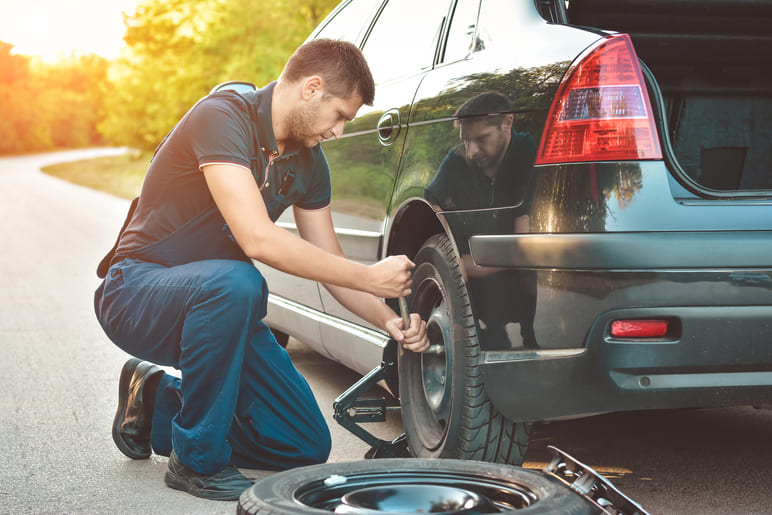
Steps to Change a Flat Tyre:
- Turn on your hazard lights.
- Place wheel wedges in front of or behind the tyres to prevent rolling.
- Use your jack to lift the car, following manufacturer guidelines.
- Loosen the lug nuts (counterclockwise).
- Remove the flat tyre and install the spare.
- Tighten the lug nuts in a star pattern.
- Lower the vehicle and re-tighten the nuts.
Important: Temporary spares (space-savers) are only designed for short distances at reduced speeds. Drive slowly to the nearest garage for a proper tyre replacement.
4. No Spare Tyre? Don’t Panic—There Are Alternatives
Many vehicles today come without a full spare, but you may still have options.
Check for:
- Tyre repair kits or sealant foam
- Portable air compressors
- Run-flat tyres that allow limited driving after a puncture
If none of these are available or the damage is too severe, it’s time to call in the experts.
5. Contact a Mobile Tyre Repair Service
When you're stuck in the middle of nowhere, you need a service that can reach you fast—and fix your tyre on the spot. That’s where QuickTyreFix.co.uk comes in.
Why QuickTyreFix.co.uk Is Perfect for Remote Breakdowns:
- Nationwide Coverage, including rural and off-the-grid areas
- Mobile tyre fitting vans equipped with new tyres, tools, and compressors
- 24/7 emergency service—day or night
- Real-time tracking of your technician
- Pay-as-you-go model—no breakdown membership required
Whether you're on a B-road in the Lake District or somewhere remote in the Scottish Highlands, QuickTyreFix.co.uk brings the help to you.
6. Keep Yourself Safe While Waiting for Help
If you're waiting for a mobile tyre technician or breakdown service:
Safety Tips While Waiting:
- Stay inside your vehicle if you're near fast traffic.
- Move away from the road if it's safe and safe to exit.
- Use reflective triangles or warning lights (if available).
- Keep your phone battery charged. Use it only when necessary if signal is limited.
- Stay warm. If it’s cold, run the engine occasionally with the heater on, but ensure your exhaust pipe isn’t blocked.
7. Prepare for Poor Signal Areas
Breakdowns in remote areas often come with limited mobile reception. It’s smart to be prepared.
What to Do If There’s No Signal:
- Walk to higher ground—often signal improves even slightly.
- Use emergency SOS settings on your smartphone (some phones can call 112/999 without signal).
- Ask for help from passersby or nearby homes (if reachable and safe).
Tip: Save QuickTyreFix.co.uk’s emergency number offline or print it and keep it in your glove box.
8. Stay Visible—Especially at Night
Visibility is critical when you're stranded in a remote location.
How to Stay Visible:
- Use hazard lights continuously.
- Wear a high-vis vest if you exit the vehicle.
- Use torches or reflective triangles if you’re walking or flagging down help.
- If you're on a dark country road, keep your interior light on to signal that someone is inside.
9. Essential Emergency Kit Checklist
Always keep an emergency breakdown kit in your boot. It can turn a disaster into a manageable delay.
Must-Have Items:
- Spare tyre or puncture kit
- Tyre pressure gauge
- Jack and wheel wrench
- Reflective vest and triangle
- Portable phone charger (power bank)
- Torch and extra batteries
- Blankets or warm clothing
- Water and snacks
- First-aid kit
- List of emergency contacts
Services like QuickTyreFix.co.uk often respond faster when you can describe your location or issue clearly.
10. How to Prevent Flat Tyres in the First Place
Flat tyres often happen when we least expect them, but many can be prevented with routine checks.
Preventive Tips:
- Check tyre pressure monthly. Underinflated tyres wear faster.
- Inspect tyres for cuts, nails, or bulges.
- Rotate your tyres every 5,000 to 8,000 miles.
- Replace tyres with low tread depth (below 1.6mm is illegal in the UK).
- Avoid potholes and sharp debris, especially on rural roads.
- Consider installing tyre pressure monitoring sensors (TPMS) if your car doesn’t already have them.